SPATIAL 3D - this is not a virtual tour / MAY, 2026
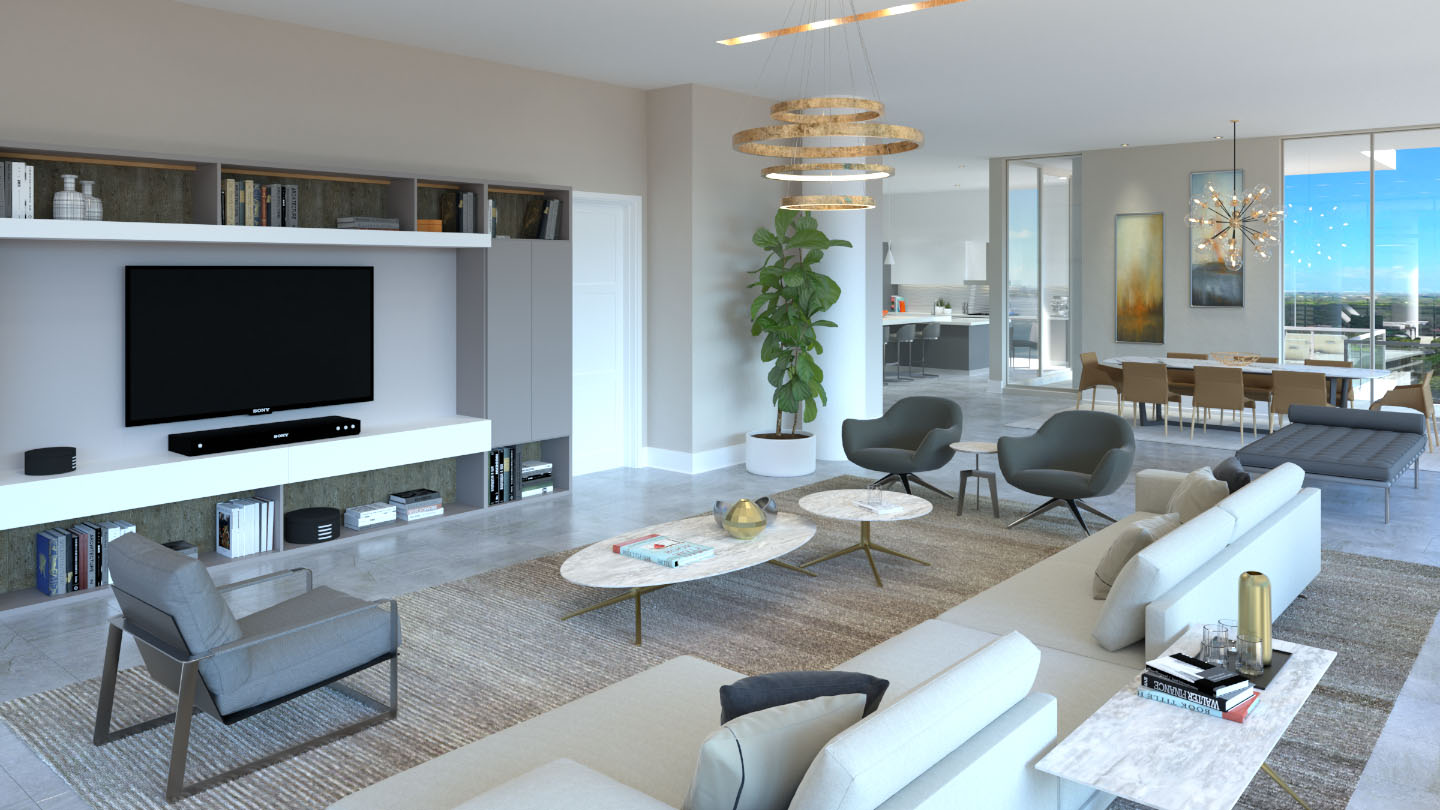
For years, property marketing has relied on a compromise.
Floor plans had to be interpreted. Renderings showed isolated moments. Most “virtual tours” were little more than stitched panoramas pretending to be space.
Spatial 3D changes that completely.
This is not a slideshow or a sequence of images attempting to simulate movement. It is the first time buyers can naturally experience an unbuilt project directly from their phone, tablet, or desktop browser — instantly, and without friction.
No apps, headsets, setup, or training.
Most buyers cannot confidently read a floor plan. They try to imagine how rooms connect, how large spaces feel, how circulation works, and whether the environment will actually suit the way they live. Even with strong renderings, there is always a layer of interpretation involved.
Spatial 3D removes that barrier by turning the project itself into an experience.
Instead of mentally assembling a development from plans and marketing images, buyers move naturally through the environment as though it already exists. Residences, amenities, waterfronts, arrival sequences, and shared spaces become part of a continuous spatial experience rather than disconnected pieces of marketing material.
Because the system is fully web-based, access is immediate. A buyer can open a link from a website, presentation, email campaign, or QR code and enter the environment within seconds using the device already in their hand.
The result is simple: clearer understanding, stronger engagement, and more confident decisions before construction begins.
After more than three decades working in architectural visualisation, one thing became increasingly obvious: most existing “virtual” property experiences were still forcing buyers to interpret space rather than experience it naturally.
The graphics improved. The interfaces improved. But the core problem remained.
Spatial 3D was developed over six months of intensive testing, refinement, and real-world use to solve that problem properly — not as an experimental concept, but as a practical system designed to work instantly on the devices people already use every day.
The goal was simple: make the technology disappear.
If an 80-year-old can instinctively enter and understand an unbuilt residence within seconds, the technology has finally become invisible — which is exactly how it should be.
Spatial 3D is now becoming a core part of how Archiform 3D approaches off-the-plan presentation, project communication, and buyer engagement moving forward.